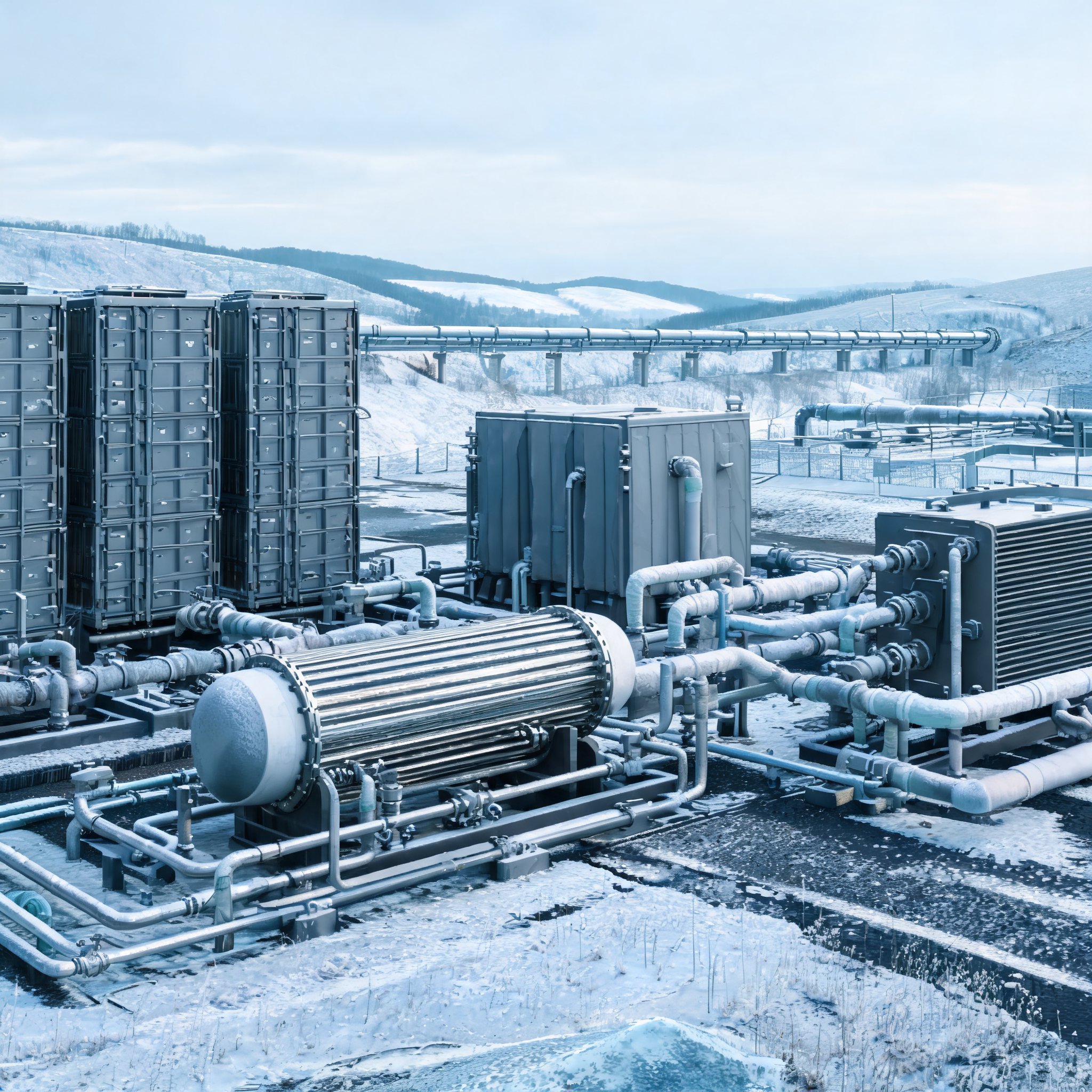
DWE GmbH will supply the methanation technology for Nordic Ren-Gas Oy’s e-methane plant in Tampere, Finland, following the project’s final investment decision. The German company will provide a catalytic methanation unit designed for a plant with 50 MW of electrolysis capacity. The unit converts hydrogen from an electrolyzer and captured biogenic carbon dioxide into renewable e-methane.
DWE’s scope covers the process license and design, prefabrication, manufacturing, testing, delivery, installation supervision, commissioning and performance testing. The unit will be shipped as prefabricated, factory-tested modules. According to DWE, this approach shortens on-site construction and reduces interface risks.
Feedstock, output and grid use
The Tampere plant is expected to use about 40,000 metric tons of biogenic CO2 per year, captured from flue gases at the Tarastenjärvi waste-to-energy plant. It is expected to produce roughly 190 GWh of renewable e-methane annually for the European market and up to 200 GWh of district heat for Tampere. The e-methane is to be injected into the Finnish gas grid and supplied to end users in the German transport sector through the interconnected European gas network.
Reactor design and variable load
DWE said its methanation technology was designed for renewable hydrogen from the outset. The company’s boiling-water-cooled tube bundle reactor is intended to perform the role of a cascade of adiabatic reactors without gas recycle or rotating equipment, and to follow renewable power across a 30–100% load range. That description is a company claim about the design; the article does not provide operating data from the Tampere unit.
Christian Obermeier, DWE’s head of PTX & Technologies, described methanation as the heart of the Power-to-Gas value chain. He said DWE has continued developing the technology since supplying a methanation unit for the Werlte plant in Germany in 2012, which the company describes as Europe’s first commercial Power-to-Gas plant. He added that the Tampere unit is intended to turn renewable hydrogen and biogenic CO2 into high-quality e-methane.
Christian Schuhbauer, DWE’s head of New Technologies, said the reactor design avoids several conventional cascade components and can operate flexibly with renewable power. Saara Kujala, CEO of Nordic Ren-Gas, said the Tampere project brings together European technology partners for industrial-scale e-methane production and that DWE’s technology and manufacturing capabilities are an important part of the value chain. Martin Fraunhoffer, managing director of DWE, said the project is DWE’s first large-scale methanation project and a key milestone in its Power-to-X strategy.
The project’s expected output links biogenic CO2 capture, electrolytic hydrogen and gas-grid injection. Its planned district heat supply adds a second energy product for Tampere. The plant’s performance will depend on construction, commissioning and the operating conditions of the integrated electrolysis, CO2 capture and methanation systems.