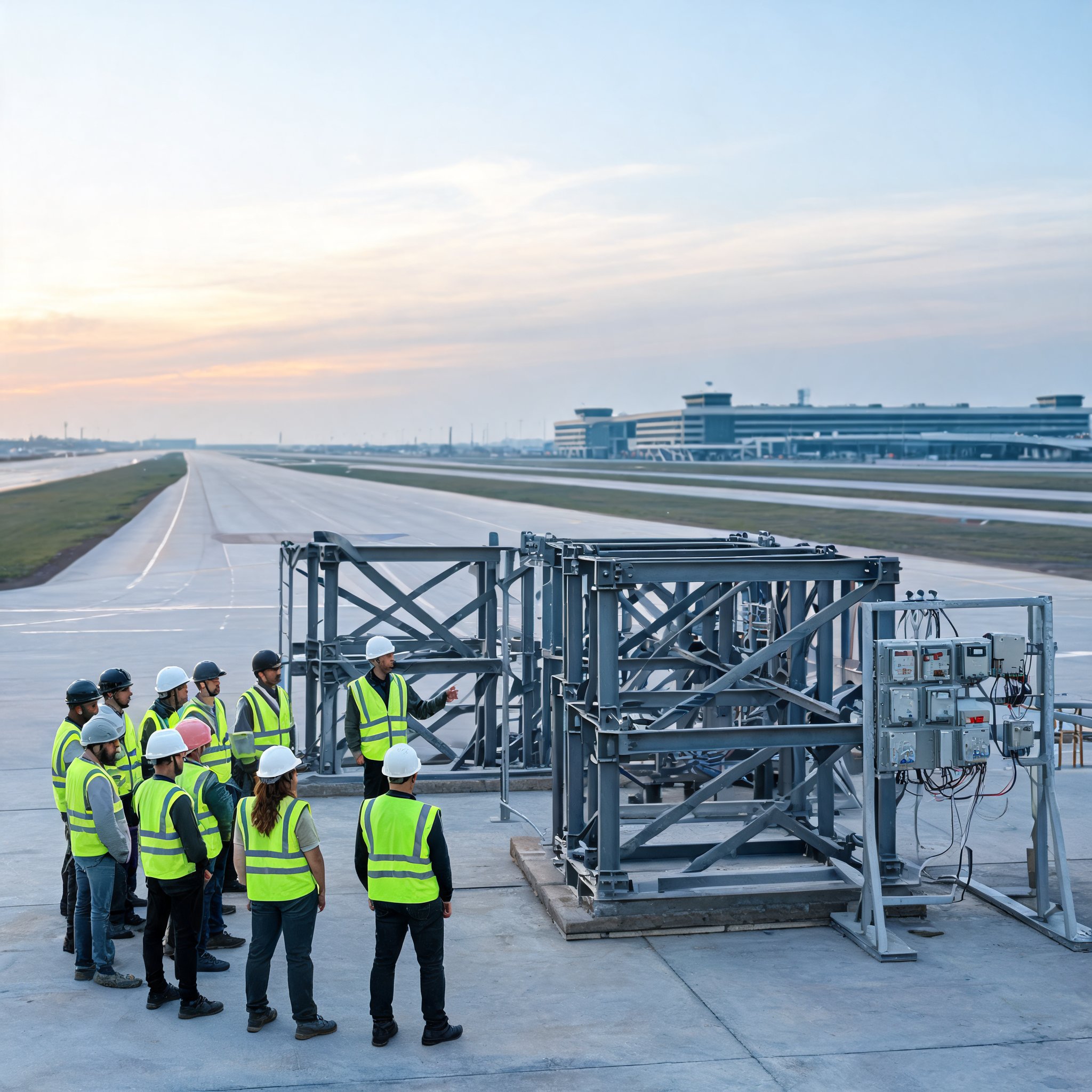
Heathrow Airport has convened the first meeting of a new skills council as it prepares the workforce for its proposed expansion, with training opportunities expected across engineering, logistics, electrical installation, carpentry and joinery.
The Heathrow Infrastructure Skills Council brings together unions, colleges and training providers. Its creation is part of the airport’s effort to build a pipeline of workers for a programme that has not yet received final political clearance. Heathrow forecasts at least 17,500 local jobs at peak construction and 33,000 jobs across its nine neighbouring boroughs by 2055.
Training commitments
The airport has pledged 5,000 youth apprenticeships, traineeships and other routes into work. It will also take part in the new West London Construction Training Excellence Centre, one of 10 such centres being established nationally by the Department for Education. An expanded SME Academy is intended to help smaller firms compete for supply chain work generated by the privately financed project.
Heathrow plans to launch a refreshed face-to-face work experience programme for local students within the next year. An annual careers event is due to begin in March 2027. These measures sit within a new Economic Development Framework, which sets out how expansion could support local and national growth.
Political uncertainty
The skills push comes amid renewed questions over political backing. Prime Minister Andy Burnham has declined to endorse the scheme, while Chancellor John Healey has championed its economic benefits. Burnham has suggested that expansion should be left to London and Londoners. The Sunday Times has also reported that he told Transport Secretary Heidi Alexander he was unconvinced by the project.
Healey took a more supportive stance on Friday, saying that the case for a third runway at Heathrow had always been a case for growth. The contrasting positions leave the airport trying to maintain momentum while the project remains subject to a lengthy planning process.
Skills pipeline
Lord Blunkett, co-chair of the Heathrow Infrastructure Skills Council, said the challenge required looking beyond the immediate project. He called for recognition of the potential of expansion and investment in major future infrastructure programmes, and for the education and skills pipeline needed to meet that challenge.
Heathrow has said the runway may not open until 2039, four years later than its original target. That timetable means the training plans are being developed well before construction can begin in earnest. For now, the airport is assembling employers, educators and local partners around a forecast of thousands of construction roles, even as the political conditions for the build remain unresolved.