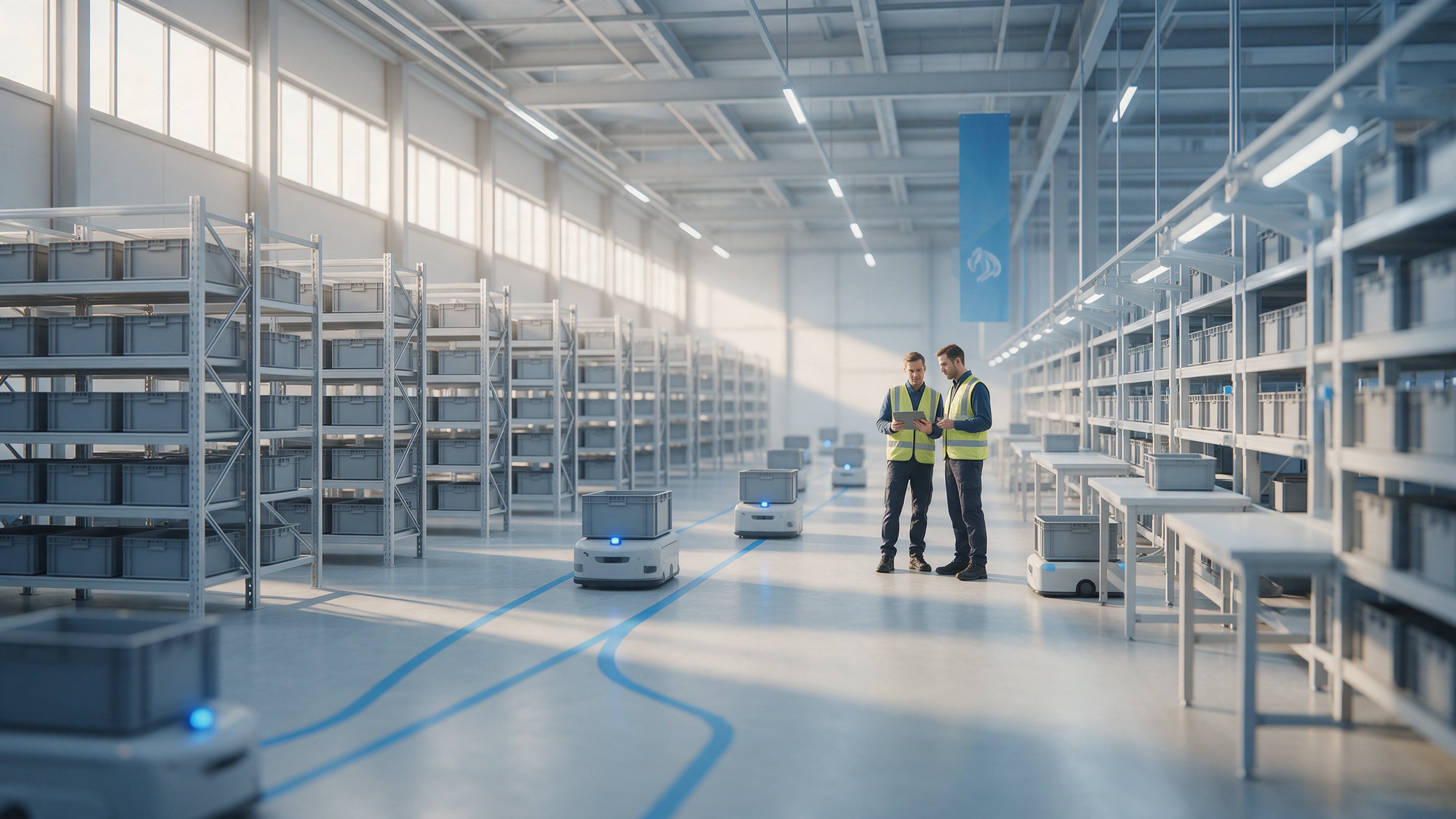
Hellmann Worldwide Logistics is working with warehouse automation specialist Exotec to introduce an intelligent robotics system at Siemens Smart Infrastructure Buildings' Nuremberg site. The partners say the project will automate storage, order fulfilment and the movement of materials within the facility, adding capacity for expected growth while improving efficiency, quality and space utilisation.
The Nuremberg warehouse has been operated by Hellmann since 2025 as a full-service logistics provider for Siemens Smart Infrastructure Buildings. Under the new arrangement, autonomous robots will store and retrieve goods and carry totes to picking stations. The system is initially planned to provide around 35,000 storage locations and is designed to scale as demand rises. Storage capacity and picking stations can be added flexibly and with minimal effort, according to the companies.
The automation is scheduled to go live in mid-2027. Siemens and Hellmann expect it to support future growth and anticipated annual increases in volumes at the site. The plan therefore links a logistics service partnership with a robotic storage and picking system rather than treating warehouse automation as a standalone equipment purchase.
Siemens Smart Infrastructure Buildings says smart buildings can manage their own energy demand and generation dynamically. This is achieved through bi-directional energy flow between on-site generation and storage systems and the external electricity grid, allowing a building to balance supply and demand, help eliminate energy waste and reduce greenhouse gas emissions. The energy-management description provides context on the business unit's smart-building approach, while the robotics project concerns warehouse operations at the Nuremberg site.
Daniel Schnuck, director global warehouse at Siemens Smart Infrastructure, said the new automation solution would create a foundation for future growth, continuous operational improvement and a consistently flexible, high level of service for customers over the long term. The statement frames the project around capacity and service resilience rather than a specific robot model or vendor claim about measured performance.
The project also reflects a common division of roles in modern logistics: a logistics provider operates the warehouse, an automation specialist supplies the robotic system, and the building user sets the service and growth requirements. Hellmann's existing role at the Nuremberg site since 2025 provides the operational base for the planned expansion. The announcement did not disclose the number of robots, the exact footprint of the installation or the full range of products handled through the new system.
Because the system is scheduled for mid-2027, the announced benefits remain planned outcomes. The initial capacity figure of about 35,000 storage locations is a design target, and the ability to add storage and picking stations is described as a scalability feature. The project's progress will depend on implementation at the site and on actual volume growth after go-live.