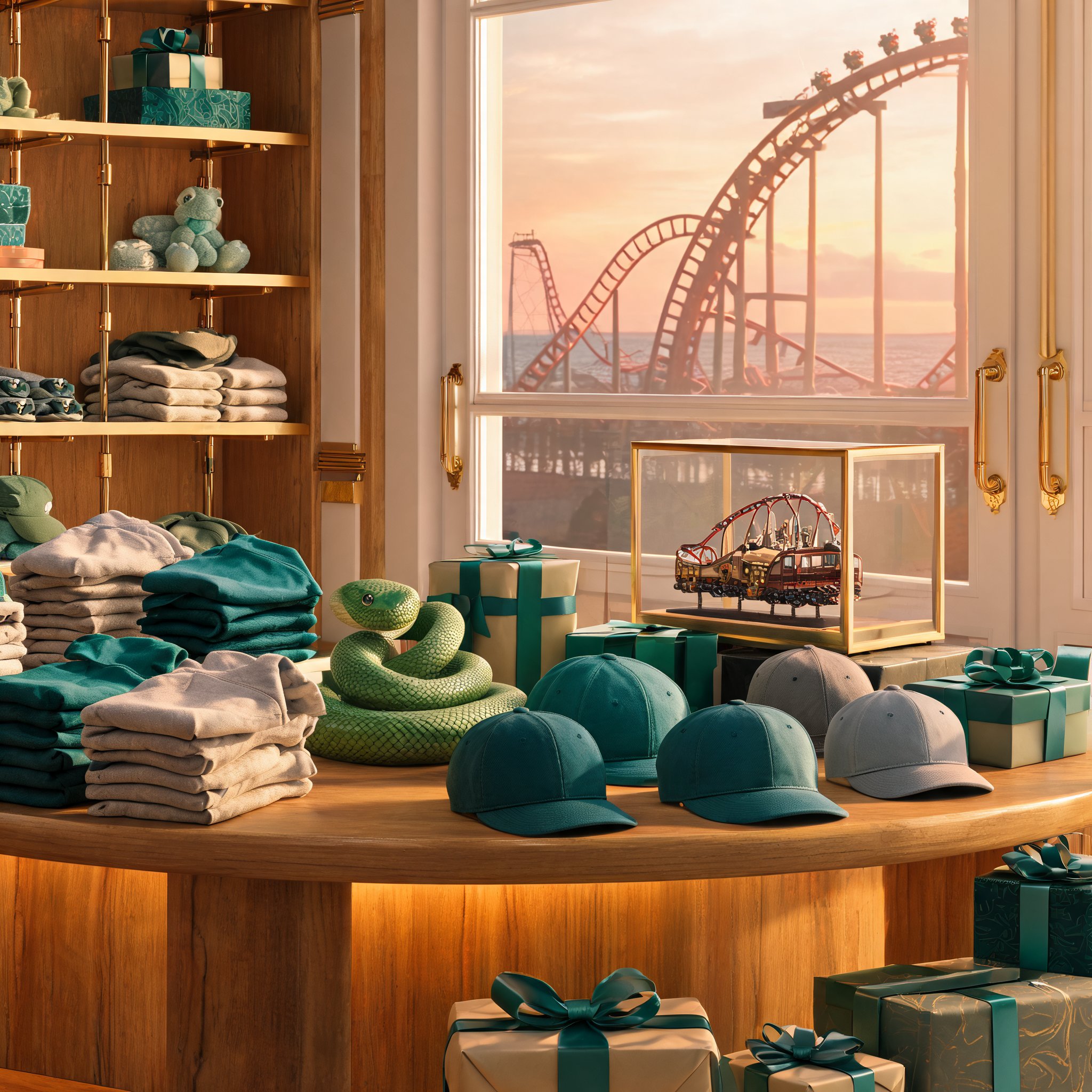
At 130 years old, Blackpool’s Pleasure Beach is best known for its seaside amusement park atmosphere, wooden roller coasters, the Big One and its shows. Its retail operation is less visible but equally deliberate. Damian Jackson, head of retail, oversees physical stores, e-commerce, ride photography and merchandise development, and describes a model in which retail is planned as part of the attraction experience rather than attached at the exit.
The flagship shop sits at the main entrance in the Casino building, supported by outlets across the site. Jackson works with Amanda Thompson from initial concept through design brief, product development, sampling and final approval. The stated principle is that a range must have a reason to exist, a defined customer and an authentic connection to the resort; a logo on a generic product is not treated as sufficient.
Segmenting a diverse audience
Pleasure Beach serves a diverse same-day audience: families on a first visit, school groups with limited spending money, teenage friends and couples, international tourists, lifelong fans and serious coaster enthusiasts. Their reasons for buying differ. A family may want a traditional souvenir, a ride enthusiast an accurate collectable tied to a specific attraction, teenagers confectionery or trend-led apparel, and heritage-minded guests nostalgia, craftsmanship and the stories behind the resort. Jackson says sales reports show what is selling, but observation and guest feedback explain why. The team asks whether a product would be worn away from the resort, displayed proudly by an enthusiast, excite a child or genuinely remind a family of its visit.
The portfolio is built around customer missions, price points and engagement levels. It spans impulse purchases such as confectionery, magnets, keyrings and badges; practical items including bottles, bags and ponchos; fashion-led apparel; children’s products and plush; and premium or limited-edition pieces for enthusiasts and collectors. Attraction-specific merchandise sits alongside broader branding, licensed ranges, playful products and heritage collections. Jackson argues that having something for everyone means a carefully edited range in which each product has a purpose, a target customer and an appropriate price, not unlimited choice.
Aviktas and the premium collectable test
Aviktas is the clearest example of retail being built into a new attraction from the start. Rather than applying the ride logo to a set of products, the range was developed around the attraction’s visual world: its golden snake, emerald colouring, mythology and sense of mystery. Jackson cites a run of 50 models priced at £250 each that sold out completely. For him, it shows that authenticity, detail and a strong connection to the attraction can support premium limited-edition collectables. The example also marks a boundary: the premium argument depends on a distinctive story and execution, not price alone.
Design, heritage and licensed IP
The creative process begins with Jackson and Thompson discussing the attraction, its audience and the opportunity for a range. They consider story, visual identity, emotional impact, fashion relevance and long-term importance within the wider portfolio. The treatment changes by attraction: ICON lends itself to a clean, contemporary, fashion-led approach, while heritage rides such as Big Dipper and Grand National draw on archive artwork, engineering details, nostalgia and generations of guest memories. Quality and detail cover materials, colours, proportions, trims, embroidery, packaging and shop presentation. Commercial fundamentals are assessed alongside them: intended customer, expected demand, price points, production quantities, lead times and sales locations.
Heritage is central because the resort has been part of family traditions for 130 years. Its archive of attraction imagery, typography, posters, architecture and stories can be reinterpreted through contemporary apparel, homeware and collectables, using history freshly rather than making everything look old-fashioned. Playful assets add humour, colour and character to engage children, families and casual visitors. Licensed brands such as Nickelodeon and Aardman’s Wallace and Gromit require partnership with the IP owner and approved suppliers, following brand guidelines and approvals while connecting characters to the Pleasure Beach experience. To compete with general online retailers, Jackson stresses relevance and exclusivity through exclusive designs, attraction references, location-specific details, personalisation and products that celebrate the visit.
Demand is moving beyond the logo
Guest demand is shifting toward products that feel exclusive, authentic and considered. Jackson reports growing interest in attraction-specific merchandise, premium apparel, subtle branding, collectables, limited editions and items with a clear story, as well as merchandise that can be worn or used beyond the visit. Enthusiasts want accurate details, models, technical artwork and products that recognise an attraction’s history or engineering. Generic souvenirs and heavily branded products without an additional story have become less compelling because guests can recognise when a logo has simply been applied. Traditional souvenirs such as keyrings, magnets, mugs and confectionery remain important, but their design, quality, presentation and relevance must keep evolving.
Operational discipline and service
Stock accuracy and product availability are described as the least glamorous and most critical parts of the operation. A strong product cannot generate revenue if it is in a stockroom, has not been reordered, is mispriced or is missing where guests expect to find it. The basics include accurate deliveries, stock movement, replenishment, pricing, signage, daily compliance checks and making every unit ready to trade. Clear pricing builds trust, good housekeeping makes products more desirable and replenishment avoids missed purchases. Suppliers are treated as creative and commercial partners who understand the story and intended customer, bring ideas and meet standards on quality, communication, lead times, compliance, pricing and consistency. To encourage spending, Jackson points to desirable products, presentation, location, storytelling, pricing and team confidence. A clear price architecture lets guests enter at different levels and trade up through better materials, detail, exclusivity, personalisation or bundles rather than a higher price alone. Product adjacencies matter: plush may lead to an outfit, a ride photograph to a frame or multi-photo offer, and apparel to matching accessories.
Retail is intended to feel like another chapter of the day, not an obligatory gift shop at the exit. That means considering it during attraction, event and guest-journey planning, and using themed environments, product demonstrations, characterful displays, confectionery experiences, personalisation, ride photography and interactive selling to make shopping entertaining. Each retail space should reflect its location, with environment, products and team telling the same story. E-commerce extends the relationship year-round by letting enthusiasts follow launches, previous visitors reconnect with memories and remote customers buy selected products. It supports social and email communication, tests interest, runs seasonal campaigns and provides insight into demand that may differ from in-park behaviour. Staff are hosts, storytellers and brand ambassadors who demonstrate products, explain ranges, suggest additions and recognise when help is needed. Their work can include candy-floss making, teddy building, bubble demonstrations, photography and personalisation, and their feedback surfaces guest requests before they appear in sales reports. Gift wrapping and personalisation add value for guests who want a purchase to feel personal and cannot be replicated in a general online marketplace; they also support gifting beyond the day of the visit.
What the model shows
Pleasure Beach’s model is therefore broader than a larger gift shop. It uses segmentation, narrative, early retail involvement and service to make merchandise a continuation of the visit. The limits are also visible: premium ranges need authentic design and a clear collector audience; licensing requires approval and supplier discipline; online and in-park retail must manage stock and relevance. The claim is not that retail guarantees revenue, but that a curated, story-led offer gives guests more reasons to buy and more ways to remain connected after they leave.