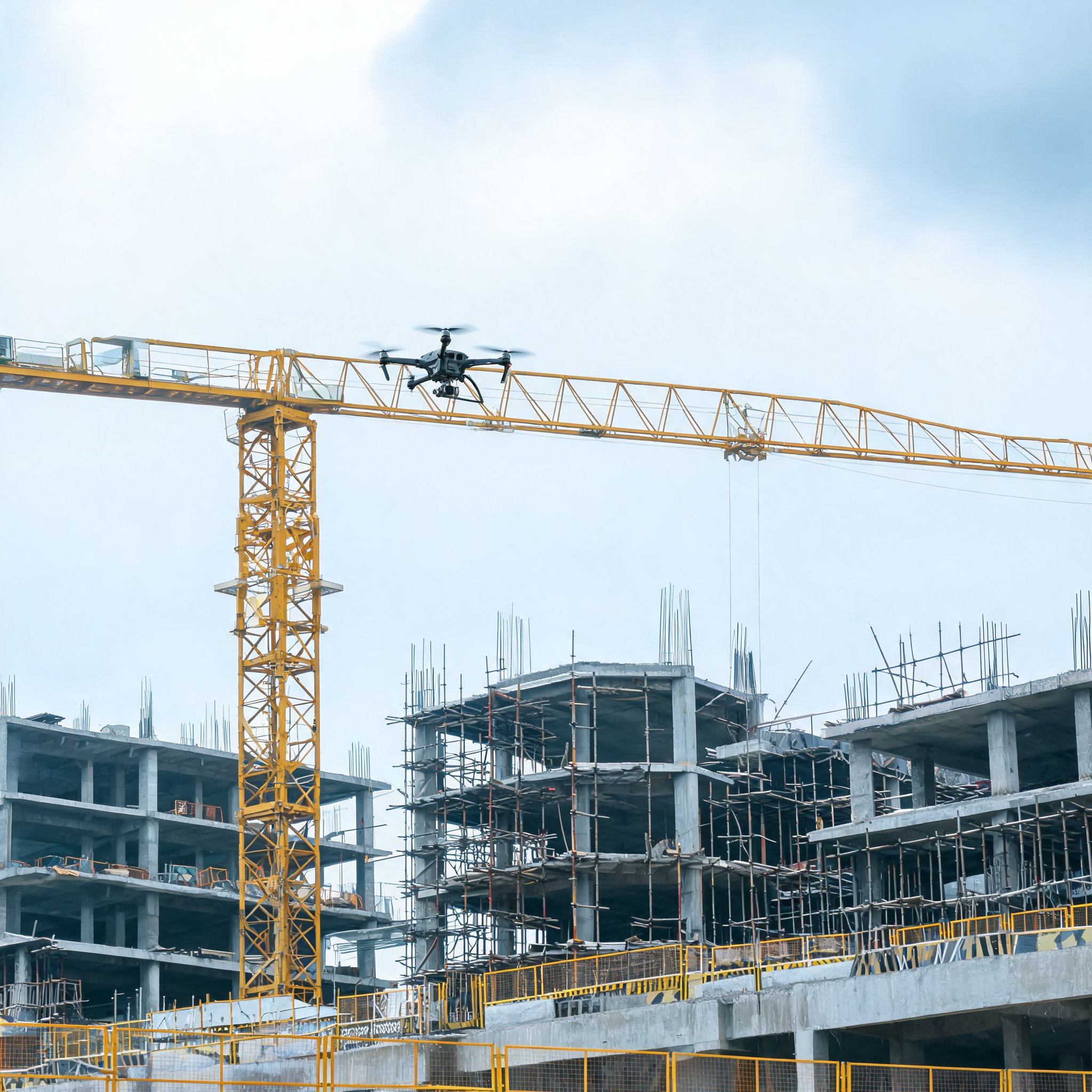
A surveying drone struck the top of a tower crane at a construction site in the Cheetham Hill area of Manchester in August and fell 120 m to the ground, according to the Air Accidents Investigation Branch (AAIB).
The AAIB said in its latest bulletin that the unmanned aircraft was carrying out an aerial survey on a pre-selected flight path over an urban construction site. The obstacle-avoidance feature was enabled at the time of the collision.
The incident was notified to the AAIB, but no formal investigation was launched. The bulletin did not identify the site or the contractor involved.
Internal review points to software limits
The construction company’s internal investigation found that the company and its remote pilots may not have fully understood the limitations of the obstacle-avoidance software, the AAIB bulletin said. The wording stops short of concluding that the software failed or assigning responsibility for the collision.
The case highlights a practical issue for drone survey work in urban construction settings: an obstacle-avoidance function is a support tool with operating limits, and crews need to understand those limits when planning flights near cranes and other tall structures. The AAIB bulletin provides no further details on the drone model, the operator, the flight-planning process or any damage or injuries.
No formal findings have been published because the AAIB did not open an investigation. The available account is therefore limited to the notification and the company’s internal review as summarised in the bulletin.